
This story appeared in Today, Explained, a daily newsletter that helps you understand the most compelling news and stories of the day. Subscribe here.
Read more Trump’s Saudi nuclear deal is making Israel uneasy
An underappreciated surreality of climate change is the incredible sense of déjà vu: Every heat wave seems to be the new worst; every hurricane season seems to break records.
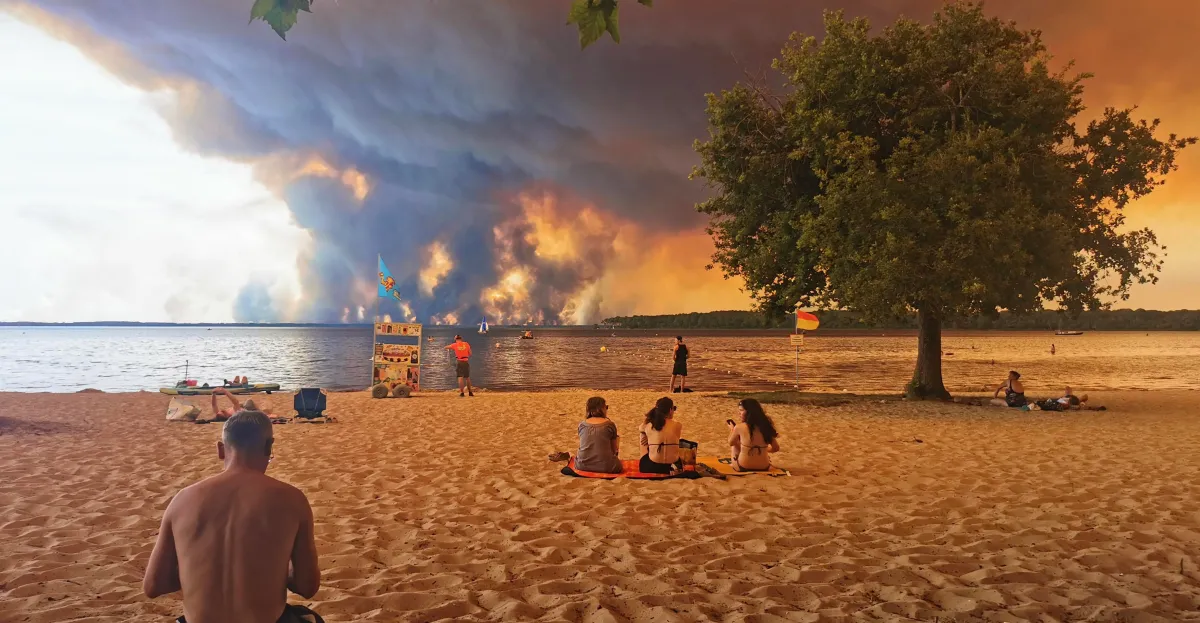
The wildfires sweeping France and Spain this week are the latest entries in that grim catalog. They are the largest blazes either country has faced in modern history — and they could worsen as temperatures spike above 100 degrees later this week.
Already, France has evacuated more than 250,000 people from their homes in the southwest, outside Bordeaux. Spain, meanwhile, ordered some 100,000 residents to relocate as fires swept rural and wooded areas to the west of Madrid.
Both countries have experience with wildfires. What’s new, however, is the scale of the fires: Wildfire season is lasting longer across Europe, and the blazes are burning larger areas. Climate scientists say that a series of record heat waves this summer — there’s that apocalypse déjà vu again! — helped make this year’s wildfire season particularly brutal in Spain and France.
Dry hot European summer
Every continent on Earth is getting warmer. But Europe is riding the express bus. The region has seen its average temperatures rise twice as quickly as the global average over the past 30 years, according to the European Union’s Earth Observation Programme.
This dubious honor begs a question, however: Why does “global warming” vary between regions if it is, ya know…global?
Read more Vox launches The Midterms, Actually, a new weekly newsletter from Astead W. Herndon
The answer relates to local geography and weather patterns. In broad strokes, the same climate story is playing out everywhere: When humans burn fossil fuels, they release carbon dioxide and other greenhouse gases into the atmosphere. Those gases make it harder for heat to escape into space.
But some places warm faster than others. Land heats up more quickly than oceans, for instance — so coastal waters can provide a bit of insulation.
Local weather patterns matter, too. One reason Europe has been hit especially hard is that air currents have increasingly allowed hot air to stall over the continent, fueling intense heat waves like the ones we’ve seen this summer.
Ironically, another major reason for Europe’s rapid warming springs from an environmental victory: In the 1980s, European countries cracked down on sulfur pollution from coal plants and factories. That pollution had been reflecting sunlight back into space and slightly cooling the continent. But as the pollution disappeared, more sunlight reached the ground — and revealed the warming that pollution had previously masked.
One link for later
➨ It is possible to wear Meta’s “pervert glasses” in a non-creepy way. Namely, and respectfully: by oneself. The polarizing $300 smartglasses come equipped with dual cameras, multiple microphones, and a whole lot of well-deserved cultural baggage.
Read more It’s not the left rising. It’s the center falling.
Before you go…
- Today, Explained newsletter